I use to dislike this one specific girl in university and I had no idea why I disliked her. She never did anything to me; I just thought she was annoying and too much of a know-it-all. Only when I did some self-reflection did I realize that she was the embodiment of every single thing I suppressed within myself. What only looked like annoyance was clearly lowkey envy and a bruised ego.
PROJECTION:
What I was doing is called projection. Projection is a psychological defense mechanism in which a person unconsciously attributes their own thoughts, emotions, impulses, behavior and traits onto someone else. Instead of recognizing the feeling within us, we perceive it as coming from the outside. What it demonstrates is that “Everyone around you acts as a mirror, reflecting back to you what you everything about you both the light and the shadow”. We like the once that reflect our light, because they do not challenge us and there is little internal disturbance with them. Like when someone mirrors our kindness, ambition, humor, intelligence, values, trauma and etc, it feels comfortable. There is ease, there is validation and you feel seen. These are most likely a lot of your friends because they affirm who you believe yourself to be. And these connections are built on shared principles, and mutual affirmation fosters support and a sense of stability. It is human nature for us to only want to see ourselves in a positive light after all and connect with others with similar views of life. But the ones that reflect our shadow. The ones that mirror our unwanted thoughts, emotions, impulses, behaviors and traits or etc. The irritation you feel, the judgment you make, the jealous admiration you experience or the suspicion that arises reveals more about your own inner world than about the other person. I call this shadow projection which only happens when we see in others what we are not ready to confront in ourselves and makes us genuinely believe our own perception without any real proof.
6 REASONS WHY WE SHADOW PROJECT
There are many reasons why we shadow project but in all cases one thing is clear as day “The call is coming from inside the house” and so we confess all that is going on in our inner world unconsciously. That’s why it is important to first check yourself before you check others. Here are my top 6 reasons:
- To avoid shame
We are highly sensitive to approval and rejection. What is discouraged we can learn to hid away and what is encouraged we can learn to carry. Many adults even our own parents from childhood would project onto us and we internalized these projections because what if they are right. But this has some negative effects E.g. A person criticized for being “selfish” may suppress healthy self-interest. Or a person punished for showing a certain emotion may deny expressing that emotion completely. And what began as a survival adaptation grows into shame, one of the most powerful emotional triggers and it does not tolerate. So if I can’t express that trait, behavior, emotion or thought then it is not fair to see someone expressing it proudly and so you label that person using the same degrading word that was said to you when you expressed it.
And even in adulthood shame projections are also common in cases whereas something didn’t work for you, you just assume it will be the same for everyone that follows that same path. So you project the shame you feel from your internalized failures onto them. It sounds more like a turn back warning signal rather than a great lesson(s) to learn about walking that same path you once chose. You forget to acknowledge that everyone’s experience with similar things is/will be different and that success can be guaranteed.
- To protect the ego
Back to your self-image, how you see yourself refused any contradictions because you can’t imagine being associated with that emotion, thought, trait or behaviour. So in human judgement if it’s not me then it’s you. If admitting “I feel envious” may clash with the belief that “I am supportive and kind”. To reduce this internal tension, the unconscious mind relocates the feeling “They are jealous of me”. We forget that we are just humans and as humans we are not above human nature. By attributing the uncomfortable to the other person, the ego remains intact and the sense of self steady.
- To preserve moral superiority
Projection can also function to maintain a sense of righteousness. If you want to be perceived as morally upright, it becomes easier to assign our wrongdoings or intrusive impulses or all unrighteousness you possess on others. E.g. A person struggling with being honesty may harshly condemn liars. Or someone with selfish impulses may accuse others of being self-centered. By doing so you manage to avoid the uncomfortable attribute in yourself, and this becomes a way of defending against the guilt or denial that is felt internally.
- Fear of vulnerability
Owning up to certain things requires vulnerability but projection allows us to avoid that vulnerability entirely. You can simply shift an external experience outward and make it the other person’s problem instead. E.g. If you feel insecure around someone, you might say, “You’re trying to make me feel small”. Or if someone is confident or something and it unsettles you, you might say “She thinks she is better than everyone”. By perceiving their existence as an attack on you, you avoid confronting your own self-perception when you are around them.
- Cognitive bias
Because we interpret reality through our own internal model, what we believe the brain seeks to confirm. In doing so, we may project our inner narratives outward. E.g. If you believe that “People judge me for…” you may interpret neutral expressions as criticism. Or if you feel unworthy, you may assume others see you that way too. By perceiving life through the lens of your unresolved self-issues, you can simply go on validating feeling bad for yourself, shrinking and etc.
- Repetition of unresolved trauma
Similar to cognitive bias we have unresolved trauma. The nervous system remembers and reacts to present situations as if they are past threats. Projection becomes a protective mechanism designed to prevent our re-experiencing pain. E.g. If you were a victim of physical abuse someone attempting to raise their hand for something may make you flinch in terror. Or If you have experienced betrayal in relationships, you may project untrustworthiness onto new partners with clean slates.
Also second hand trauma applies here too. If you have seen it happen to someone close to you, you may have absorbed the trauma. Even though you were not the primary victim, your nervous system still internalized the whole experience as your own and reacts to it.
DISTINGUISH SHADOW PROJECTION FROM SINCERITY
It is important to distinguish projection from a sincere observation. Some people can accurately recognize harmful behavior, traits, emotions or thoughts in others because of awareness. Allowing them to recognize these harmful patterns in others while maintaining responsibility for themselves separately. And it is important that you sit with it and reflect before jumping to say conclusions and being defensive. Pause, get curious (ask questions) and examine situations:
- Sincere observations are grounded in evidence: They may notice harmful traits, behaviors, thoughts or emotions that genuinely exist in the other person and feel the need to pointing it out. E.g. If a friend is repeatedly harshly critical, pointing this out is grounded in evidence and not in your own unacknowledged traits. You can literally give examples of those instances of harm. A sincere observation is conscious, objective and can be verified. So the first question you ask must be “Is there evidence of this causing actual harm to those around me?” If the answer is YES what you are doing is indeed harmful to you or others around you, please change your ways. If the answer NO, I will discuss this further last.
- Shadow projections are based on things that are non-issues: They attach their unresolved issues to present, neutral situations that shouldn’t be an issue. Like when you set a boundary with them, make a simple comment, sharing a goal, a neutral facial expression, a minor disagreement or anything that shouldn’t be a danger can become loaded with intent or meaning. Any internal discomfort felt becomes an interpersonal conflict. The external event may be small, but the intensity of the reaction is largely disproportionate to the situation. Projection clouds reality. So you must ask “Is this about what is really happening right now or am I/ are they getting triggered/making assumptions?”. If it isn’t what is really happening, Do! Not! Accept! False! Guilt! or Shame! and redirect it back to what is really happening. Recognizing what is actually happening can allow for constructive communication and problem-solving. If it is, here is how to stop it on your side.
HOW TO STOP PROJECTING
Stopping projection is not about becoming perfect or never misjudging anyone. It’s about increasing your self-awareness so much so that your reactions become conscious choices rather than unconscious defences. Since projection happens automatically, the goal is always to pause, get curious, examine the situation and integrate what you discover. Because some problems are just your problems. I repeat learn to journal because journaling is important.
- Notice your emotional spikes
Are you feeling defensive and any strong emotions? These are clues that something inside you has been activated, you are bothered by what was said. When you are activated, the brain shifts into a protective mode. Instead of curiosity, we feel this certainty. Instead of reflection, we feel urgency. That current situation acts as a trigger, not the full cause. So ask yourself, “Why does this bother you so much?” This doesn’t always mean the other person is innocent though, but it simply ensures you’re not outsourcing your own emotions or truths.
- Separate facts from assumptions
Based on the situation, what are you assuming? We mostly react to the conclusions we already made up without any evidence to back it up now. Slowing down helps you see where your mind may be filling in the gap without any actual evidence.
E.g. Fact: They didn’t reply for 5 hours.
Assumption: They’re ignoring me.
Alternative explanations: They may have forgotten, be tired or preoccupied.
But after 24 hours, they probably are. I use “probably” to indicate that this is a valid assumption backed up by a fact. Especially when you see them online on that app and still not responding to you even after sending them a follow up message. But by consciously acknowledging, “This is what happened” and “This is what I am assuming”, you create space for curiosity and to build your evidence.
- Strengthen tolerance for vulnerability
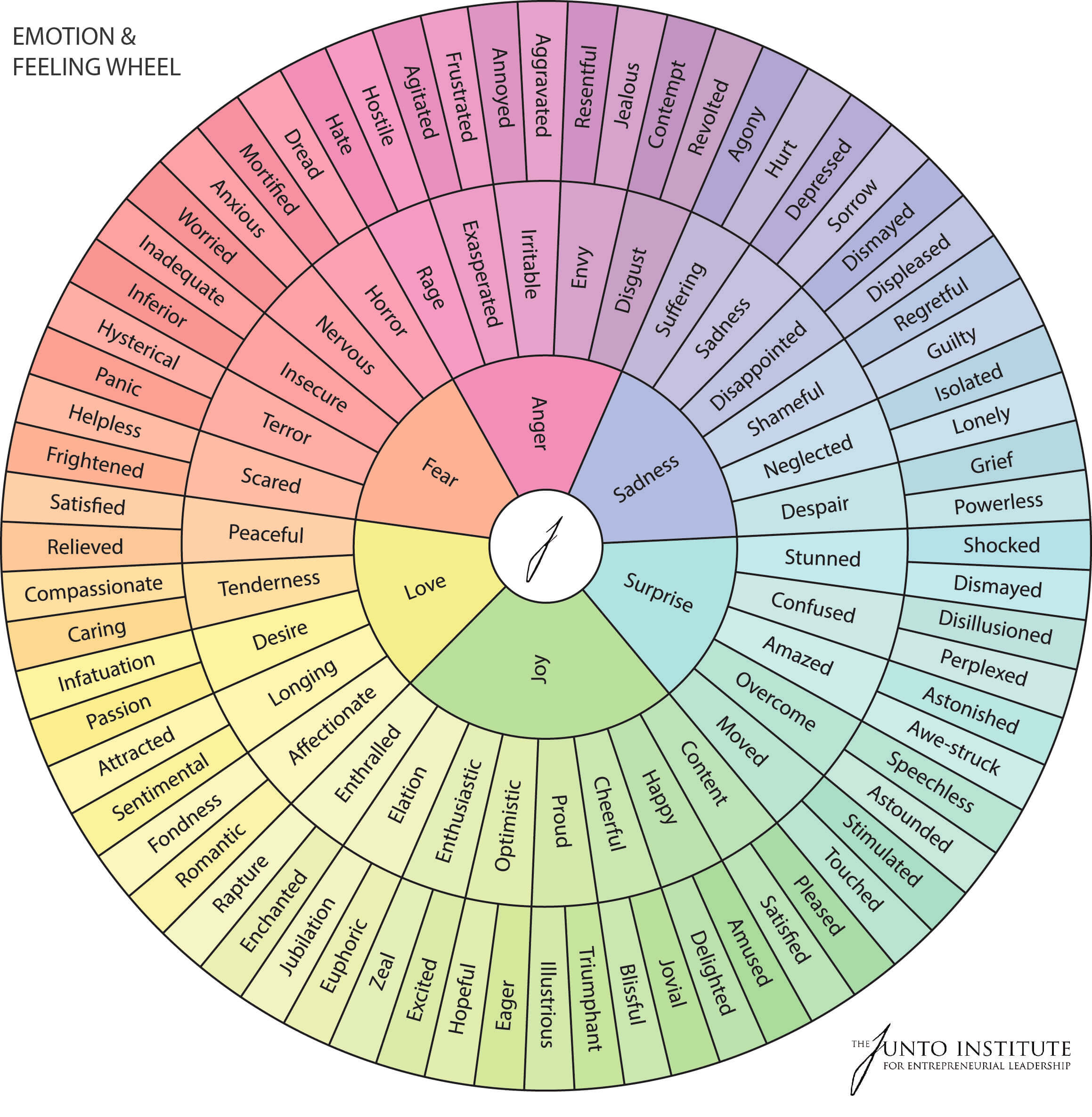
Projection decreases when your emotional vocabulary increase. Name your emotions clearly ask yourself “How did that situation made me feel?”
E.g. “I feel small”, “I feel embarrassed”, “I feel overlooked” and state what about that situation made you feel that way. It goes something like, “I feel embarrassed when you make jokes at my expense, please stop doing that” instead of “You like embarrassing me” Your response becomes more accurate and grounded in reality instead of projection. This shift requires courage and setting firm boundaries, but it immediately reduces defensiveness or projection and increases self-connection. Here is an emotional wheel to help you out: https://www.davidhodder.com/wp-content/uploads/2018/10/Emotion-Feeling-Wheel-1-1.jpg
- Look for patterns
What accusation pattern shows up in almost every relationship? If the same accusation shows up in multiple relationships, you may be projecting. Everyone is disrespectful or jealous or judges you. I am going to hold your hands when I say this: YOU ARE THE COMMON DENOMINATOR IN THOSE EQUATIONS. Repeated narratives deserve self-reflection. When you identify recurring narratives, you gain the opportunity to rewrite them.
E.g. I use to and still say that everyone is weird which is true but so am I. But now I don’t mean it in like a you are being odd rather that you are being authentic. I only use it with people who I feel are being authentic and themselves around me. Even my facial expression has changed from judgment to awe when I use that phrase.
WHAT YOU CAN SAY WHEN SOMEONE IS SHADOW PROJECTING ONTO YOU.
Before saying anything, regulate yourself. Projection often comes with intensity. If you react emotionally, the conflict escalates. Take a breath and remind yourself not to meet them at their level. Because projection says, “I know exactly what that means” while humility says, “I might be wrong, I could be misinterpreting so let me check before I assume”. This becomes your advantage. Here is what I do now:
- “What did you mean by that?”
This is a powerful communication tool because it interrupts assumption and replaces it with curiosity. This separates what was said from what you assumed was meant then the interaction moves from defensiveness to dialogue. They now have to explain themselves and give you the chance to gathering information needed to confirm if it is a projection or a sincere observation. Give them the opportunity to attack and vent without interruption.
- “Am I or are you…?”
When their fire runs out and you have confirmed that they are indeed projecting. This step requires that you must have caught on to the main internal problem behind it. So point it out for them gently and calmly. One counterattack that blocks all their attacks.
E.g. someone said that “You are boring” and gave their reason. Then ask them, “Am I boring or are you no longer entertained by me?“
“You are so dramatic”, ask them “Am I dramatic or are you unwilling to take accountability for your behavior?”
“You think you are better than everyone else”, ask them “Am I or are you the one that thinks that I am better than you?”
- Make a sassy comment
Add a sassy comment straight after the question. If you are good at comebacks this becomes your moment to shine. If you not, the internet is here for you. There’s something about a sassy comment that makes a person lose their power and makes them speechless. If you going to rebel, do it with class. Keep it boldly cheeky with a smile.
E.g. “Find another source of entertainment and you will see all your problems will disappear”. Or “I would explain it to you, but I have a feeling you won’t comprehend the depth of it”. Or my personal favorite “Anyways thanks for your feedback I will be sure to add that to my list of ‘Things I will never change about myself’”.
You get the point.
- Walk away
Do not give them the opportunity to answer, let them sit with your question and their anger of denial. Let them think what they want about you after that encounter.
CONCLUSION:
Projection is a big part of human nature. It is not your job to defend yourself against projection. When a person attributes their unresolved emotions, traits, impulses, behavior or thought on to you, remind yourself that those problems belong to them. You are not responsible for managing or fixing another person’s unconscious perception of you. Constantly trying to defend yourself against assumptions rooted in someone else’s inner conflict can become exhausting and destabilizing. Over-defending will pull you into a dynamic where you feel pressured to prove your innocence rather than remaining grounded in your own truth or emotion. However, it is your responsibility to make sure you are seeing situations clearly so that you do not project your own unresolved problems onto others. Self-awareness is your own individual work to do. When you consistently practice this internal clarity, you reduce the likelihood of misplacing your own problems onto others or absorbing their problems as your own. In that space, you stop living reactively and start living consciously.
THANK YOU FOR STOPING BY!!
Stay beautiful and blessed